VPC Protection Workflow

What were the design principles?
The design was guided by three core principles: contextual guidance over automation, clarity in complexity, and trust through transparency. AI was positioned as a decision-support layer that provided relevant guidance at key moments while keeping users in control. Given the highly specialized security audience, interactions prioritized efficiency, explainability, and minimal cognitive load. The experience also maintained a neutral, utility-focused visual language that aligned with existing security workflows and reinforced user trust.
What challenges did i face?
The target users were highly specialized security professionals, and direct access to them was limited. This made it challenging to validate how much guidance AI should provide versus how much control should remain with the user. The solution relied heavily on domain experts, iterative reviews, and careful consideration of trust and explainability.
How did you validate that this solution would work?
The approach was validated through iterative reviews with product managers, engineers, and domain experts, ensuring recommendations aligned with real security workflows and operational constraints. The resulting experience reduced group sprawl, improved consistency in decision-making, and helped users move through complex security tasks more efficiently.

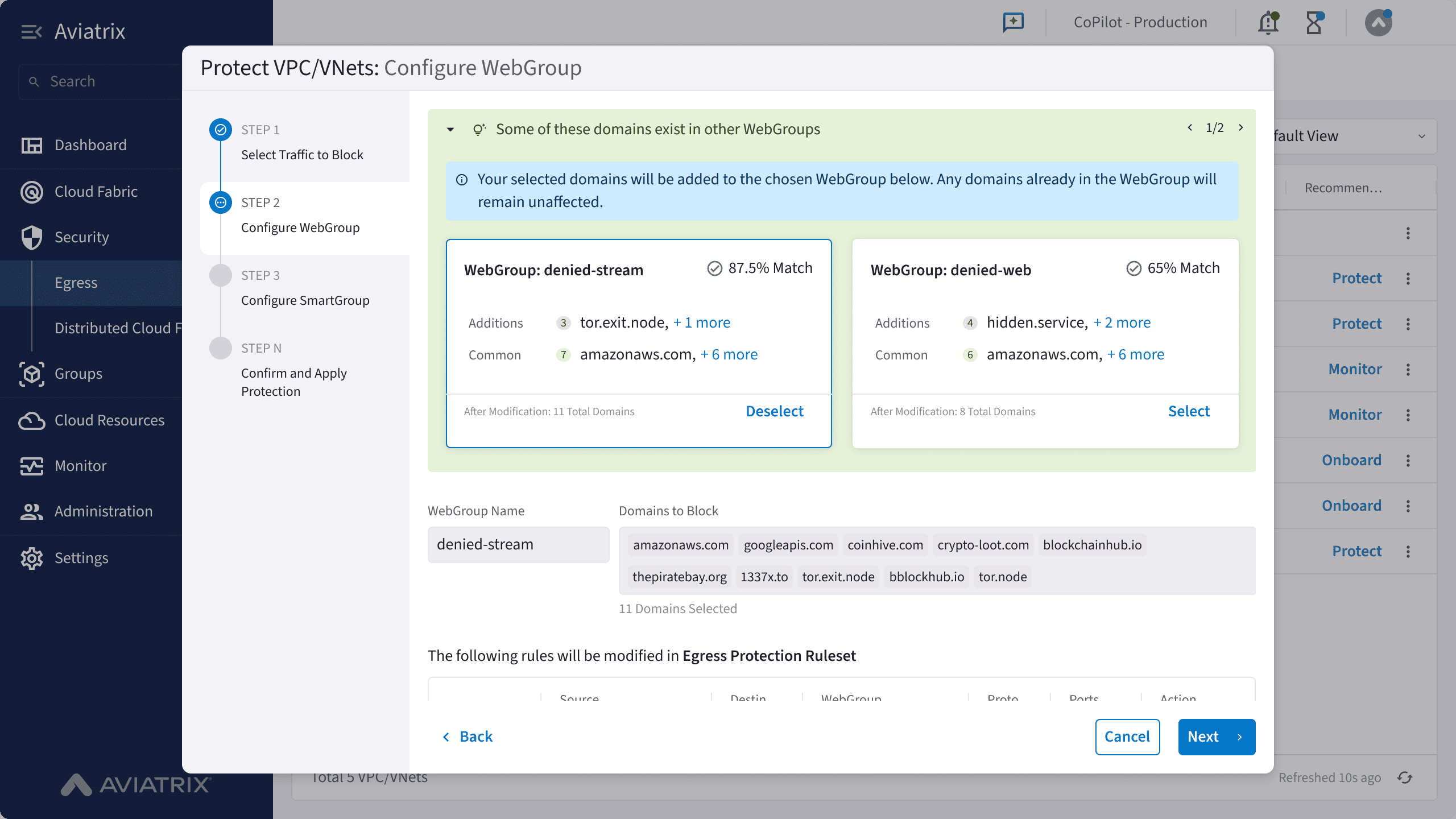


Challenge
As cloud environments scale, users struggle to manage an increasing number of Web Groups and Smart Groups. They also face difficulty interpreting traffic data and confidently deciding what should be blocked.
Solution
We embedded AI into the workflow to help users interpret traffic insights, make confident blocking decisions, and reuse existing Web Groups and Smart Groups wherever possible.
Impact
The solution reduced Web Group and Smart Group sprawl by encouraging reuse, and enabled faster (20%), more confident decision-making.
Multi-User Firewall Policy Management