Aviatrix
—
2025
Tackling Group Proliferation and Decision Fatigue for Policy Creation
Team
Product Manager, 4 Engineers
STATUS
LIVE
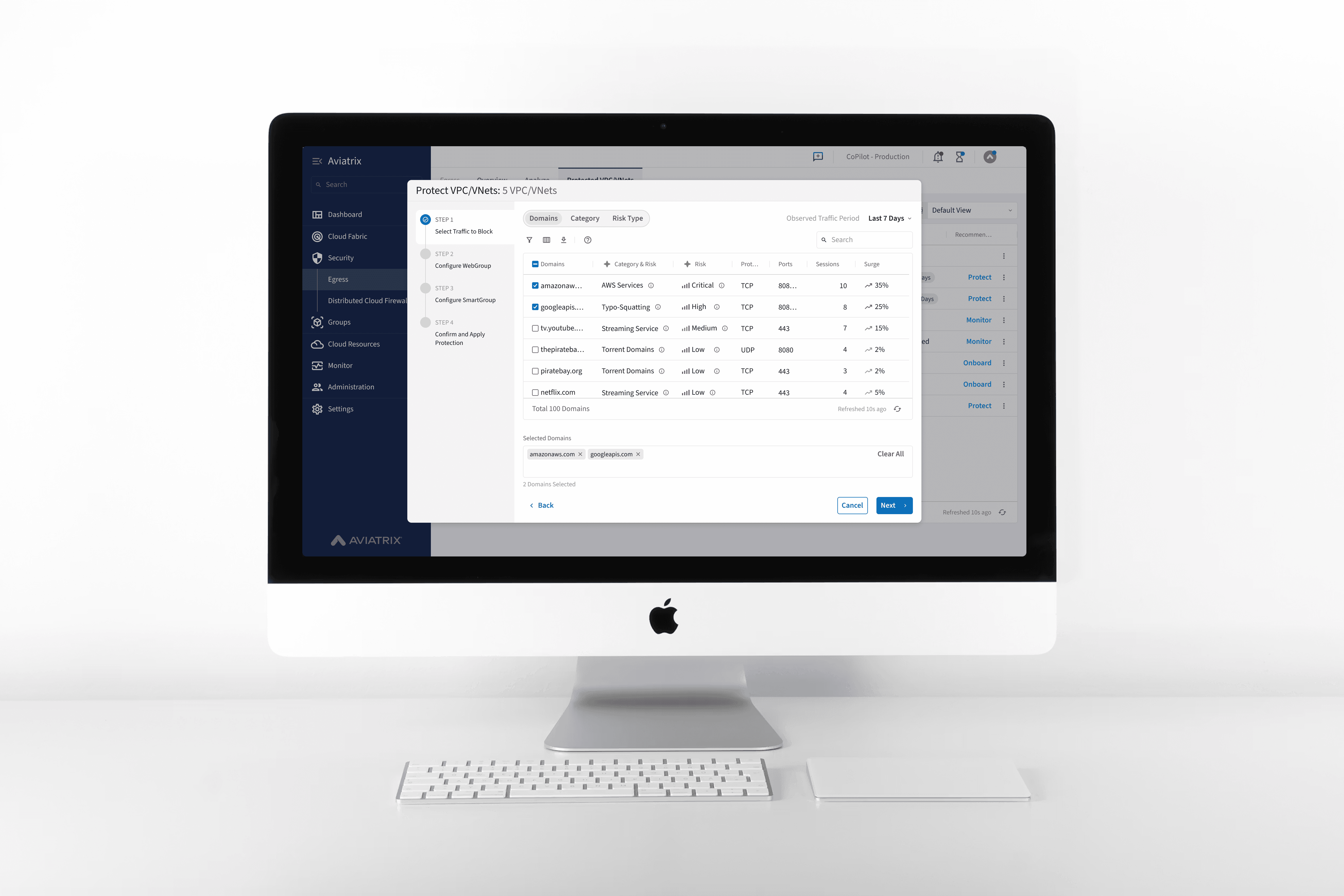
As cloud environments scale, securing them becomes more complex. In Aviatrix CoPilot, users analyze high volumes of traffic across VPCs/VNets and translate insights into firewall policies.
THE CHALLENGE
This work focused on three key UX problems:
Proliferation of Web Groups and Smart Groups
Complexity of making effective traffic-blocking decisions
Inability to easily apply rules across multiple or all VPCs
CONSTRAINTS
No direct access to users (due to privacy restrictions)
Regulatory compliance requirements from the start
Tight timeline with limited UX infrastructure
Engineering team new to UX processes
IMPACT
Reduced Web Group and Smart Group sprawl through reuse
~20% improvement in user productivity
Faster decision-making enabled by AI-driven traffic insights
RESEARCH & DISCOVERY
This project was driven by a central question: How might we make traffic protection more intuitive, scalable, and insight-driven?
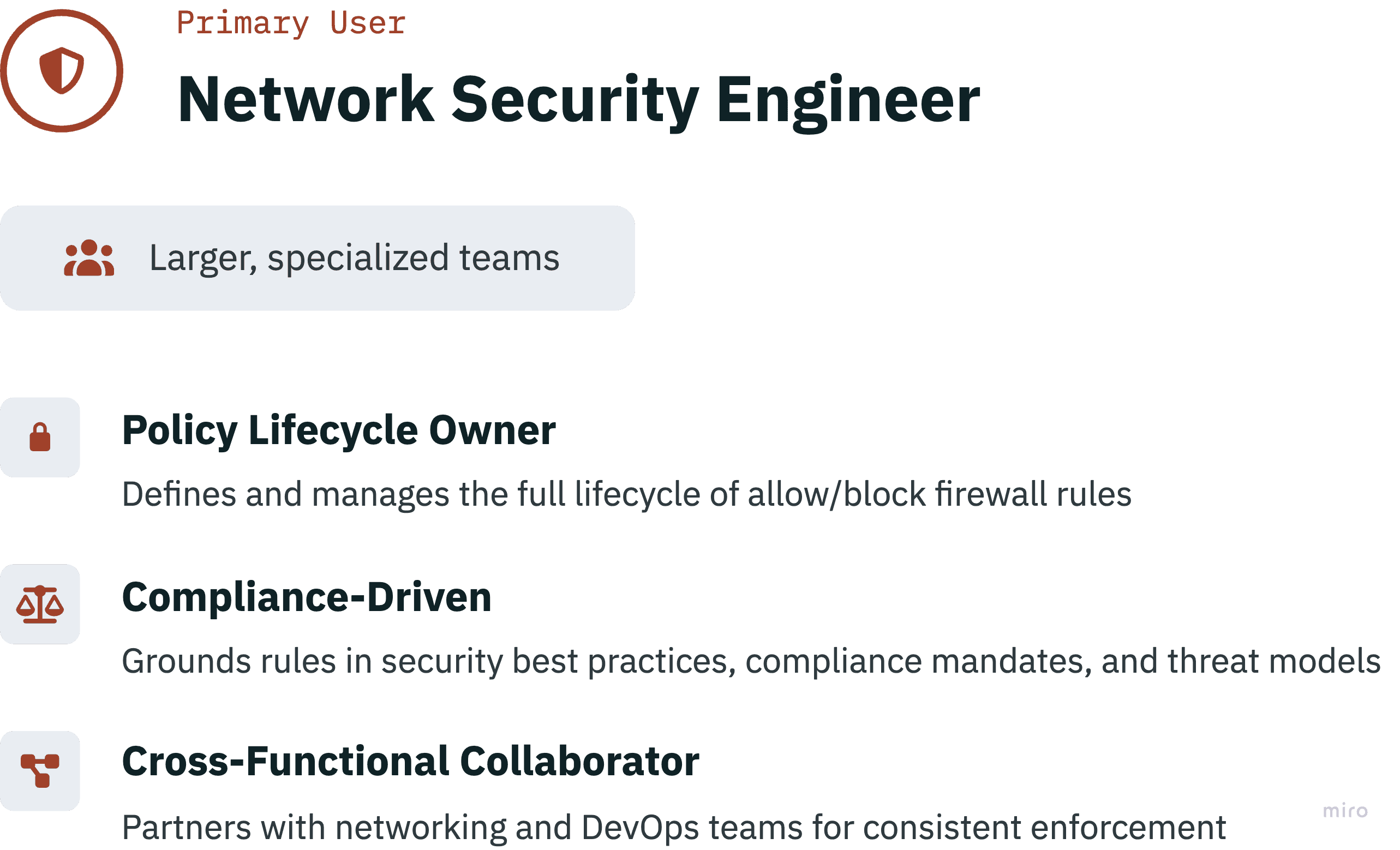
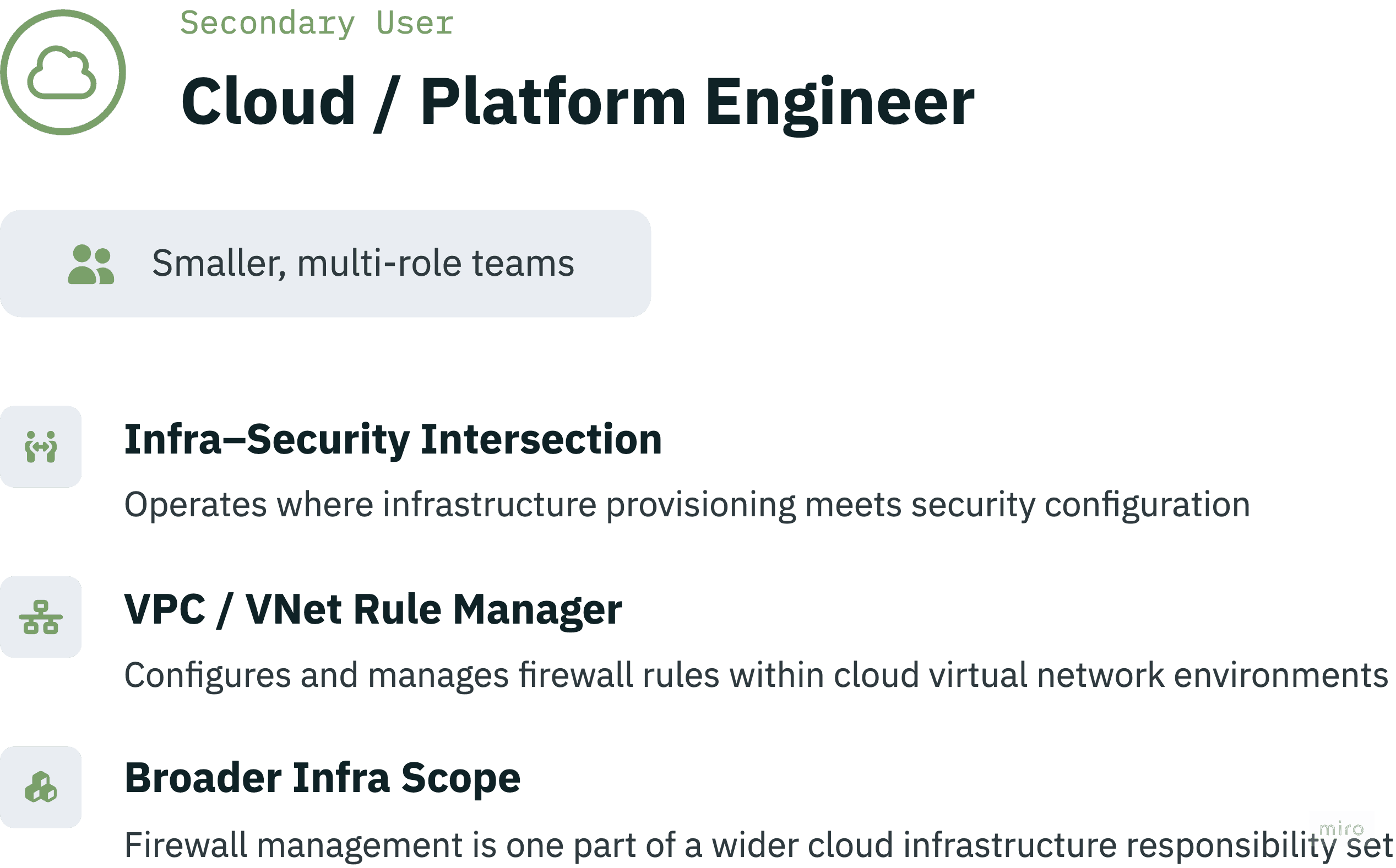
To answer this, I grounded the problem in the realities of the users- Network Security Engineers in larger organizations and Cloud/Platform Engineers in smaller teams.
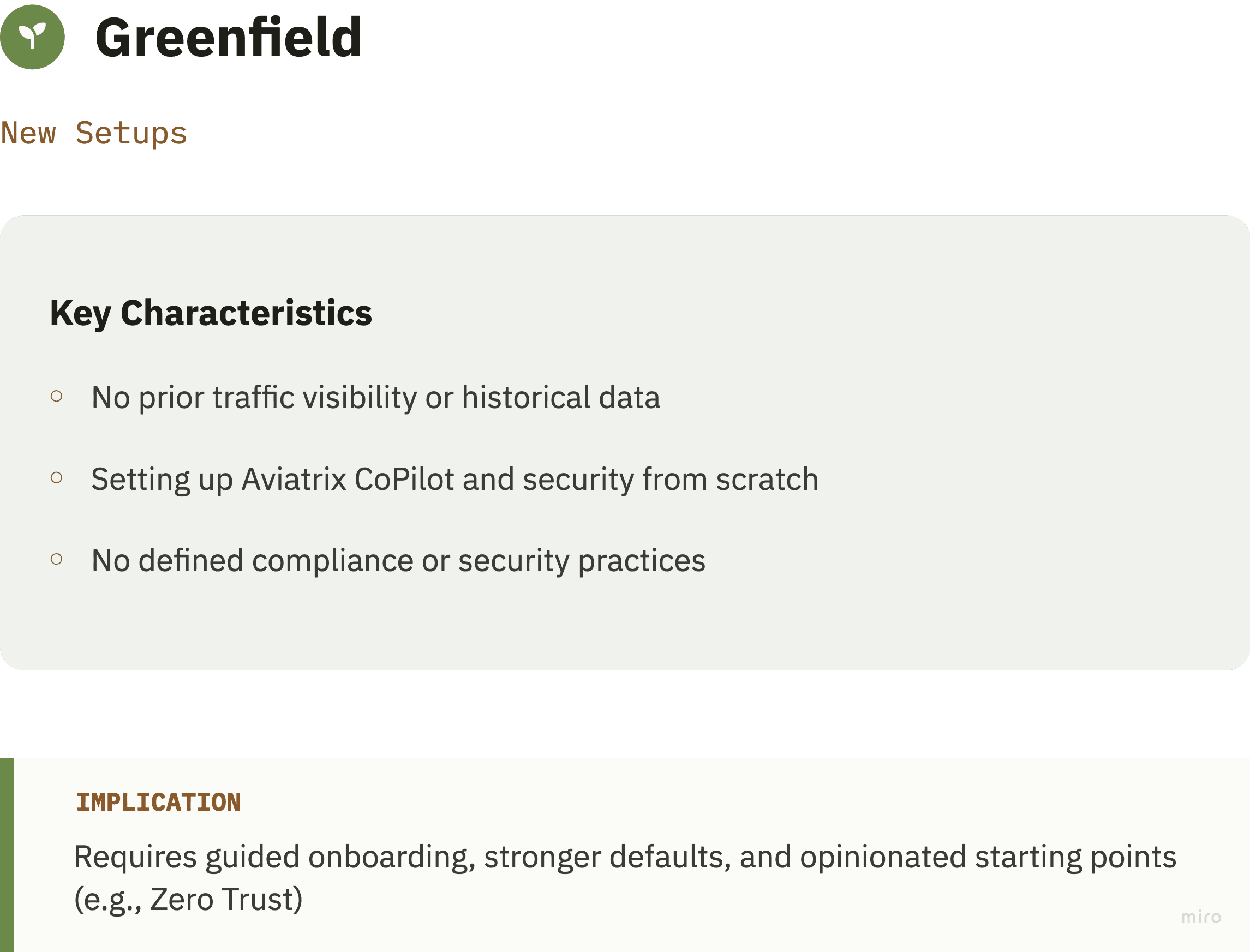
User Context: Greenfield vs. Brownfield Environments
Beyond user roles, I identified that workflows and decision-making varied significantly based on the maturity of the user’s environment, specifically whether they were operating in a greenfield or brownfield setup.
This distinction had a direct impact on how users approach traffic protection.
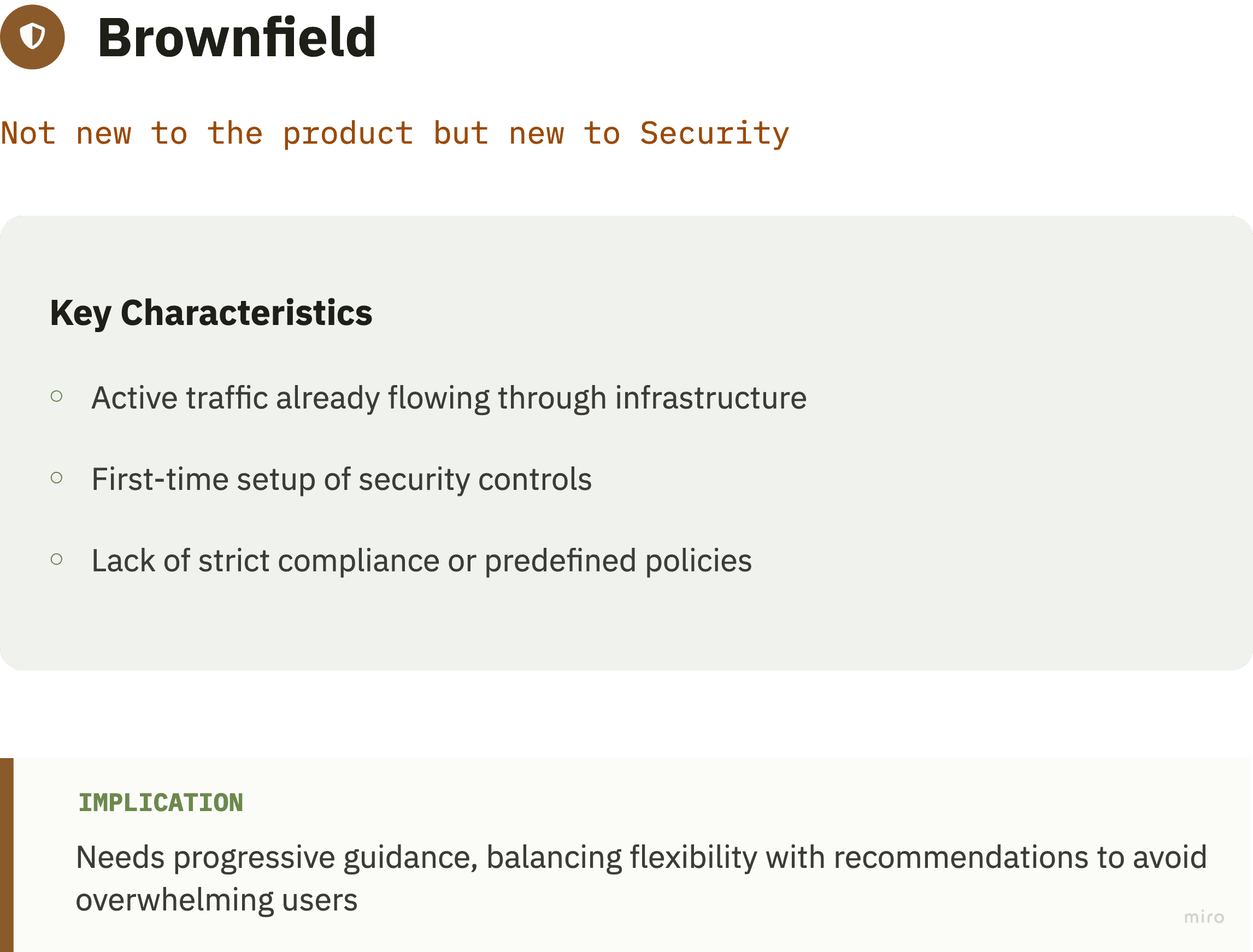
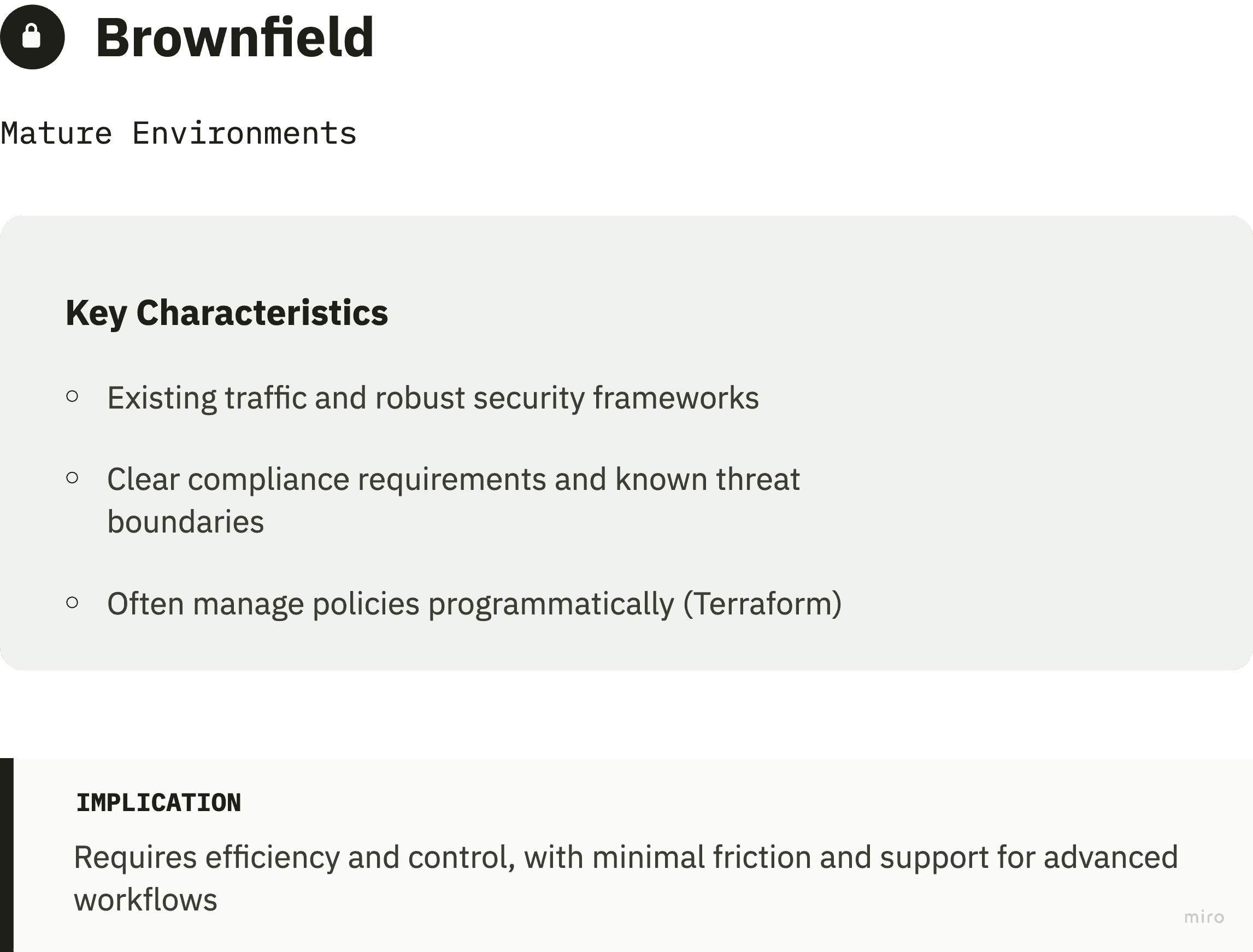
With a clearer understanding of user behavior, I mapped the end-to-end journey—from traffic observation → decision-making → enforcement.
DESIGN STRATEGY
AI-INTEGRATED WORKFLOW
Instead of introducing a standalone conversational chatbot, AI was embedded directly into the workflow at critical decision points.
The goal was to assist users in interpreting traffic insights, making informed blocking decisions, and navigating complex scenarios, while improving overall efficiency.
This approach positioned AI as a decision-support layer, guiding users contextually rather than requiring separate interaction.
DESIGN CONSTRAINTS & CONSIDERATIONS
Design decisions were shaped by both accessibility requirements and a highly specialized user base:
Reduced emphasis on aggressive or persuasive CTAs to avoid biased actions
Maintained a neutral, utility-focused visual language aligned with security workflows
Prioritized clarity, readability, and low cognitive load for expert users operating in high-stakes environments
CROSS-FUNCTIONAL COLLABORATION FRAMEWORK
To embed UX into a fast-moving, engineering-led environment, I established lightweight but consistent processes:
Weekly design workshops with Product, Legal, and Engineering to align on constraints and decisions
Parallel design and development tracks to maintain speed without blocking progress
Structured design reviews encouraging critical feedback and edge-case exploration
Integration of UX checkpoints into existing scrum ceremonies to ensure continuous alignment
IDENTIFIED PROBLEMS & SOLUTIONS
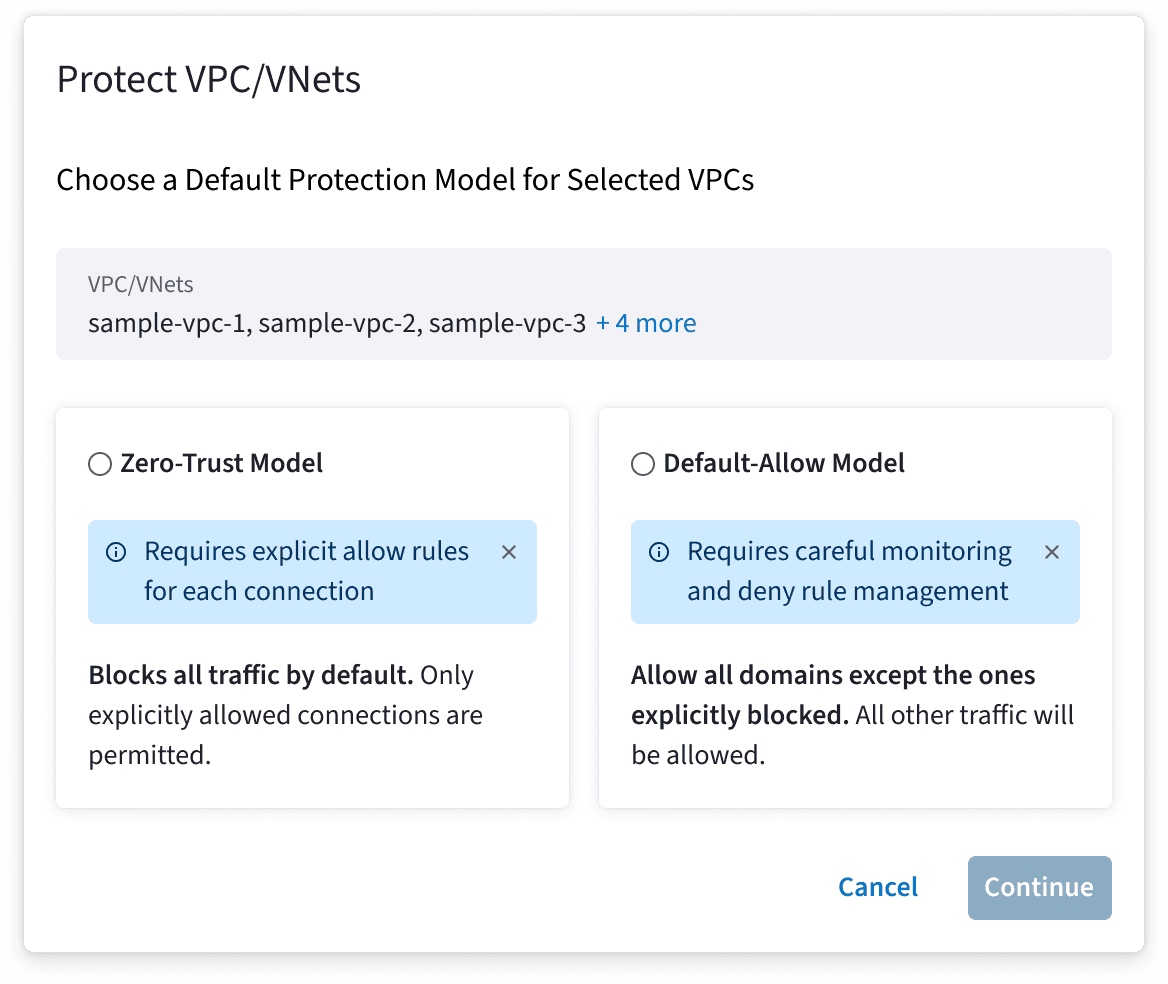
#1 AUTO-SELECTION OF ENTRY POINT MODEL
Problem: Previously, users were limited to selectively blocking FQDNs (Allow all, deny few model), which can lead to fragmented rule creation and is more suitable to greenfield or new-to-security brownfield users.
Solution: By introducing an explicit choice of entry point model to a more structured approach, enabling greater flexibility while reducing the number of rules required to manage undesired traffic.
The workflow begins with a foundational choice:
Adopting a Zero Trust posture, enforcing strict access controls by default
Allowing baseline traffic with selective enforcement, where only high-risk FQDNs are blocked
#2 GROUP PROLIFERATION
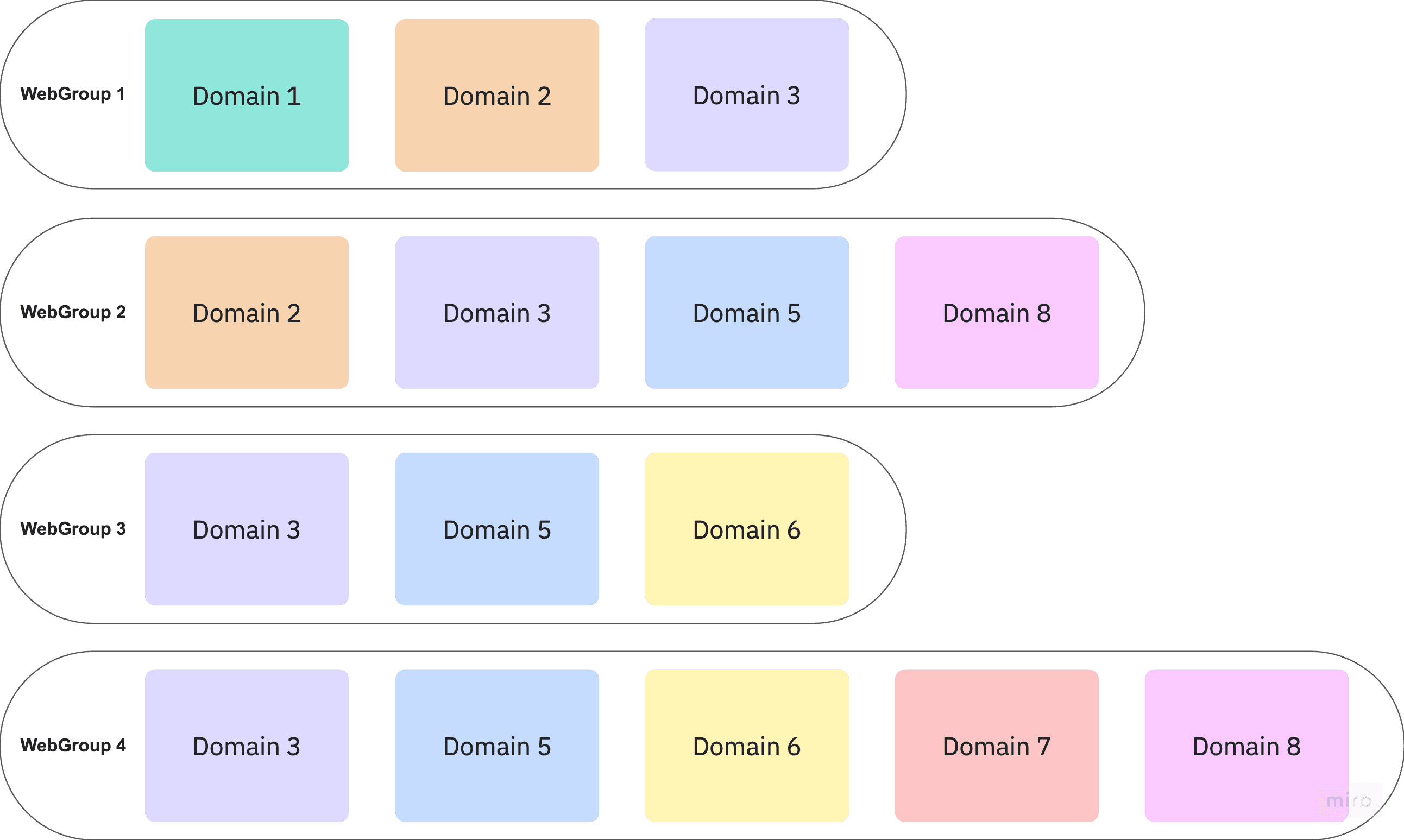
CONDITIONS
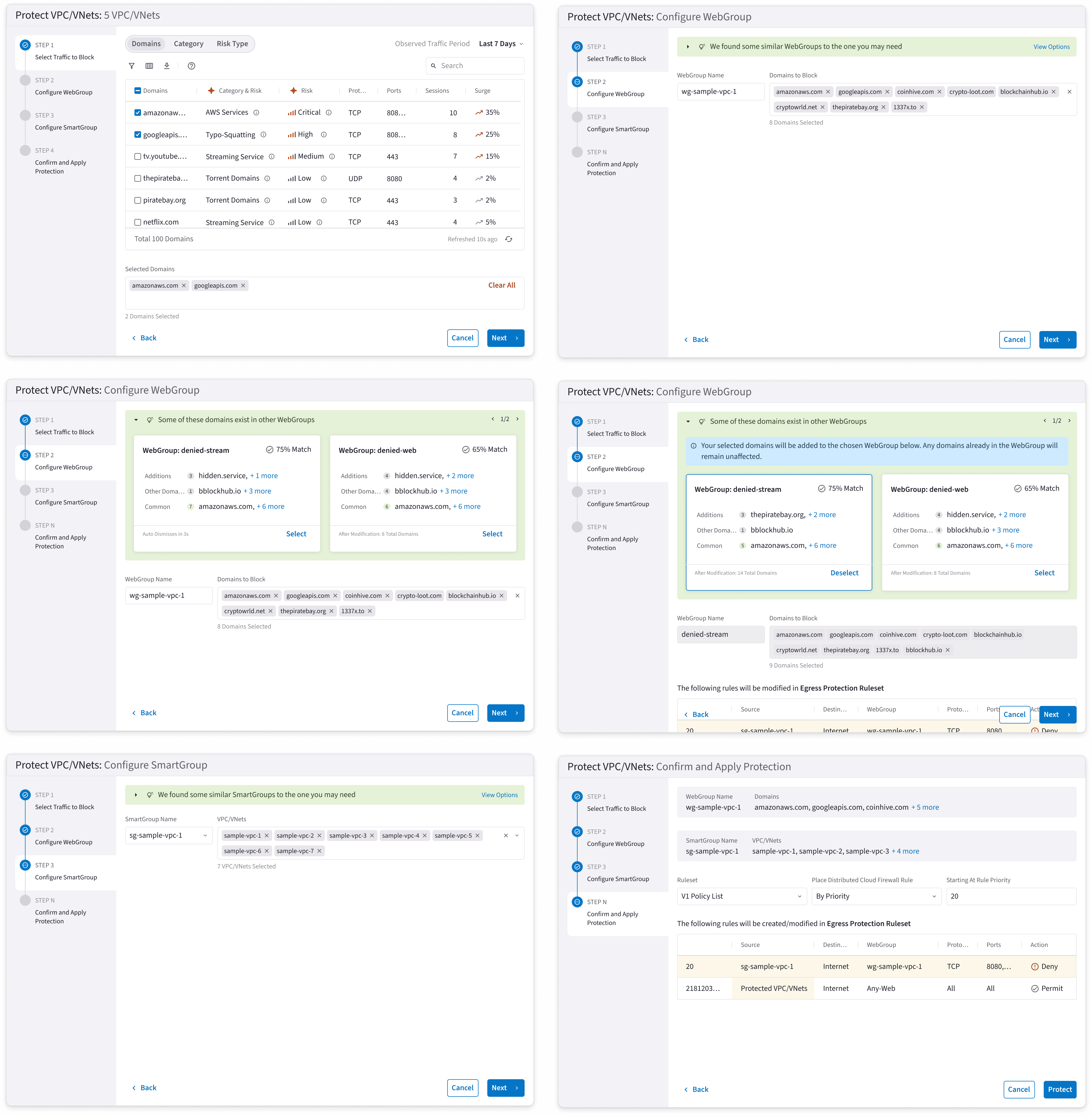
The user already has existing web groups.
Some domains being selected are already included in other web groups.
SCENARIOS
The user wants to choose a web group where many of the selected domains already exist.
The user wants to edit the closest matching web group and add any remaining domains.
SOLUTION
Display a message informing the user that “Some of these domains already exist in other web groups.”
System generated closest matches for the WebGroup being created to a WebGroup that already exists, showcasing if selecting an existing WebGroup we will need to add domains to fulfill all domains in the selection.
#3 APPLY RULES ACROSS VPC'S
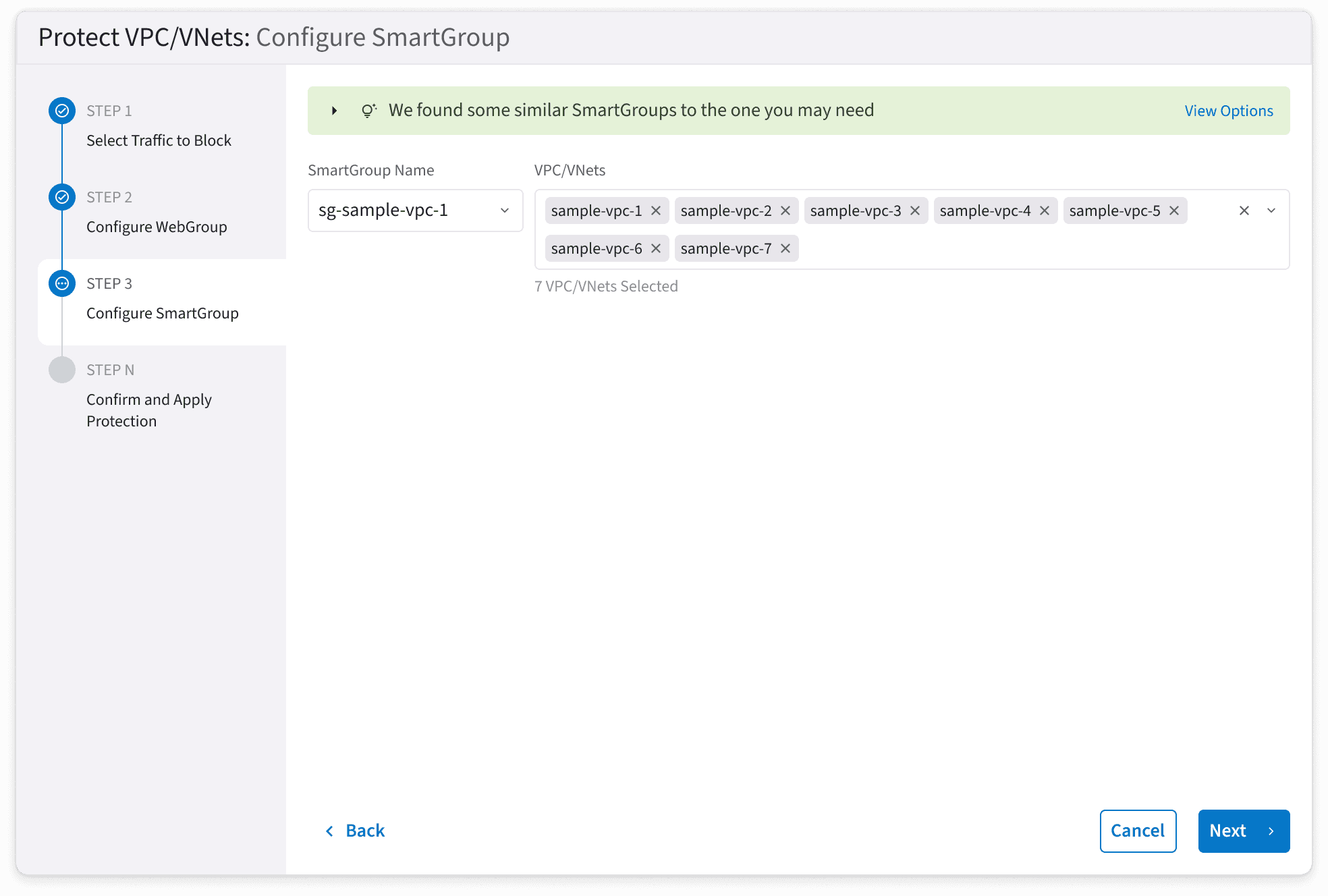
While monitoring, you might discover an issue in one VPC that should be addressed everywhere. For example, if you detect traffic to torrent domains in a single VPC, you may want to block that traffic across all VPCs not just the one being monitored.
Solution: To support this, users should be able to create rules that apply to one, multiple, or all VPCs after identifying risky domains.
IMPLEMENTATION
Engineering Collaboration
Trained full-stack and backend developers on UX implementation:
Design handoff processes using detailed specifications
Component-based thinking for scalable development
Usability heuristics integrated into code review
LESSONS LEARNED
WORKING WITH AMBIGUITY
This project required navigating unclear requirements by:
Exploring multiple hypotheses in parallel
Relying on SME input as a proxy when direct user access wasn’t available
Creating early and frequent feedback loops with pilot customers
DESIGNING WITH CONSTRAINTS
This work reinforced how constraints can shape better solutions:
Neutral design patterns can still be clear and engaging
Accessibility-first thinking improves the experience for all users
STARTUP UX LEADERSHIP
As an early UX hire in a new site, this role went beyond design execution and required shaping how UX operates within the team:
Advocating for UX processes alongside delivering design work
Delivering quick wins to build trust and establish credibility in a new site
Balancing strategic thinking around product–market fit with hands-on execution